Center Certification & Testing International
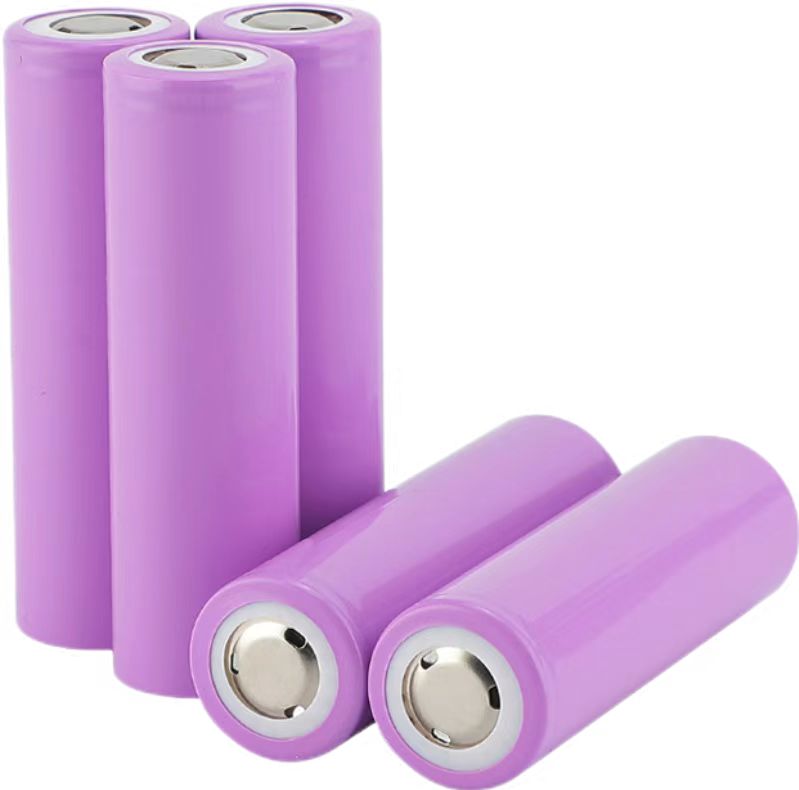
The Battery MSDS report, also known as the Chemical Safety Technical Specification, is not a traditional inspection report. Instead, it is a comprehensive technical document focused on battery safety information. It systematically summarizes the composition of battery components, physical and chemical properties, potential hazards, and emergency response plans, covering 16 standardized sections. It is applicable to the compliance requirements of most regions worldwide and serves as the core carrier of safety information in the battery production, trade, and transportation processes, helping the entire industry clearly define safety operation standards.
Wireless headphones have long infiltrated various scenarios such as daily commutes, office work, and study due to their portability and unrestricted experience. The models with charging cases have become the mainstream in the market due to their superior battery life. These wireless headphones equipped with battery charging systems need the DOE certification to enter the US market - this is a mandatory energy efficiency certification implemented by the US Department of Energy, based on 10 CFR 429/430 regulations and Level VI energy efficiency standards, focusing on core indicators such as idle power consumption and charging efficiency, while balancing energy-saving requirements and market access norms.
Label printers, as core auxiliary equipment in logistics, retail, and manufacturing, have become essential tools for enterprises\' digital management due to their efficient and precise label generation capabilities. Among these models, those with wireless functions such as Bluetooth and Wi-Fi have seen a significant increase in demand as they meet the needs of mobile office scenarios. When such products enter the Canadian market, ISED IC certification is an indispensable compliance threshold.
Bluetooth headphones, as the mainstream category of wireless audio devices, enjoy portability and freedom from constraints, and are widely used in daily commuting, office entertainment, and other scenarios. They are also a popular product for cross-border e-commerce to enter the North American market. To enter the Canadian market, ISED IC certification is an indispensable compliance prerequisite, and it is also the core proof that the product complies with Canadian radio frequency and electromagnetic compatibility standards.
On December 12th, 2025, the European Union published the Toy Safety Regulation (EU) 2025/2509(TSR) in its Official Gazette (OJ). The regulation will take effect on January 1, 2026, 20 days after its promulgation, and will be implemented after August 1, 2030 (55 months). At that time, the current toy safety directive 2009/48/EC(TSD) will be abolished.

On December 16th, 2025, the European Commission issued the implementation resolution (EU) 2025/2519 to update the harmonized standards referred to in the toy safety directive (2009/48/EC), involving two toy standards, EN 71-3 and EN 71-13.
As the core hub of home and enterprise networks, wireless routers carry the key demands of device interconnection and high-speed Internet access. Especially in the expansion of the Australian and New Zealand markets, compliance certification has become an important prerequisite for product circulation, and RCM certification is precisely the \"passcode\" for wireless routers to enter the Australian and New Zealand markets.
As a good helper in improving indoor air quality, air purifiers have become common devices in homes, offices and commercial places due to their functions of filtering dust, odors and harmful gases. Especially in Australia, New Zealand and surrounding markets, with the increasing environmental awareness, the demand for air purifiers continues to grow. To ensure that products can smoothly enter these markets, RCM certification is an indispensable key step.
Learn the latest exciting content


Tik Tok