With the rapid development of energy storage, new energy vehicles and other fields, sodium batteries have gradually become the new favorite in the battery field due to their advantages such as low cost, excellent low-temperature performance and abundant resource reserves. As a new type of energy storage and power source, the safety and compliance issues of sodium batteries in production, transportation, sales and other links have attracted much attention. Among them, UN38.3 certification is one of the key thresholds for their smooth circulation.
Why must sodium batteries obtain UN38.3 certification? The core reason lies in security guarantees and compliance requirements. Sodium batteries fall into the category of dangerous goods. During transportation, they may pose safety hazards due to squeezing, collision, temperature changes and other conditions. UN38.3 certification is the core international standard for the transportation of dangerous goods. Obtaining this certification can prove that the product complies with transportation safety regulations and effectively reduce transportation risks. At the same time, whether it is export or domestic cross-regional transportation, UN38.3 certification is an essential document for logistics, customs and other links. The lack of this certification will lead to the inability of products to circulate normally, directly affecting the market expansion of enterprises.
To apply for the UN38.3 certification of sodium batteries, the following materials need to be prepared in advance: First, basic product information, including the product manual, specification parameter table, battery structure diagram, etc., clearly stating the core parameters such as the product model, capacity, and voltage; Second, sample-related information. Sufficient qualified samples (usually 3 to 5 groups, subject to the requirements of the testing institution) must be provided, and the sample number and batch number should be marked. The third is the enterprise qualification documents, such as business licenses, production licenses, etc. Fourth, other auxiliary materials, including the previous internal test reports and product safety statements, etc., facilitate the testing institutions to have a comprehensive understanding of the product situation.
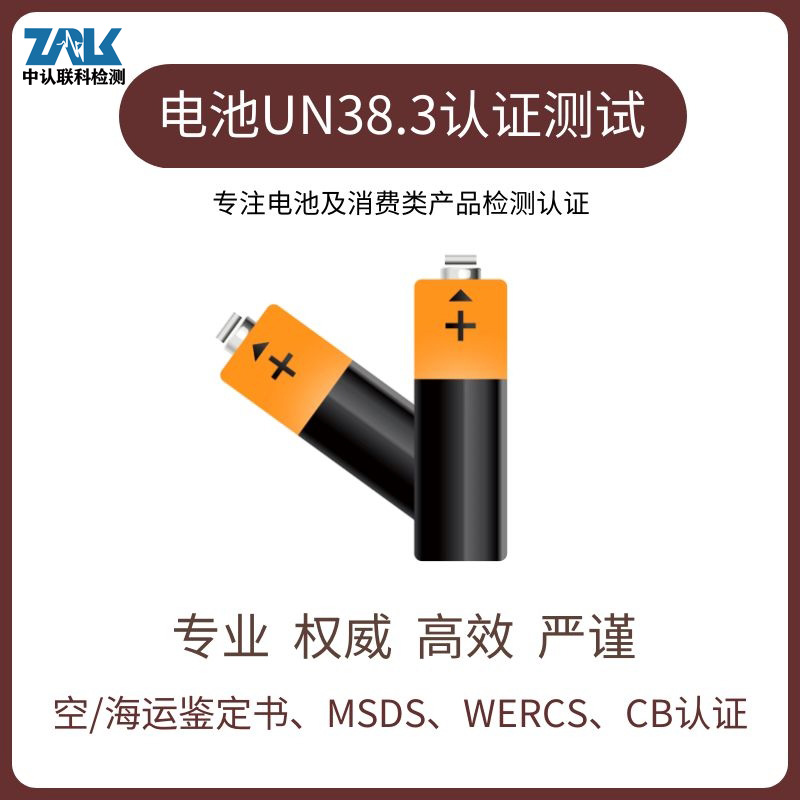
The certification process is also relatively clear, mainly divided into four steps: The first step is consultation and signing. Choose a professional and authoritative testing and certification institution (such as ZRLK), communicate the certification requirements, and then sign a cooperation agreement. The second step is to submit the materials and send the samples. The prepared materials and samples should be submitted to the institution. After the institution verifies them without error, the testing will be initiated. The third step is the implementation of the inspection. The institution conducts a series of tests on the samples in accordance with the UN38.3 standard, including height simulation, temperature cycling, vibration, shock, etc., to verify the transportation safety of the products. The fourth step is report review and certificate issuance. After the inspection is qualified, the institution will issue a test report. Once the review is passed, the UN38.3 certification certificate will be issued.
In conclusion, the UN38.3 certification serves as a "pass" for the compliant circulation of sodium batteries and is crucial to a company's market layout and product safety reputation. ZRLK has a professional testing team and rich certification experience, which can provide full-process certification services for enterprises, helping sodium battery enterprises complete certification processing efficiently and seize market opportunities. If you have the need for UN38.3 certification for sodium batteries, why not choose us? Let our professional team ensure the safety and compliance of your products.