Center Certification & Testing International

The makeup mirror battery is characterized by its small size, low power consumption, and portability. It is the core energy storage component of portable makeup mirrors in the beauty category and is widely used in portable lighting makeup mirrors and smart makeup mirror products for cross-border exports. To efficiently expand the global market in multiple countries, obtaining CB certification is a crucial compliance document. As an international safety mutual recognition system launched by IECEE, its core value lies in \"one certification, multiple country recognition\", which can significantly reduce the compliance costs for the export of makeup mirror batteries to multiple countries. Without passing the CB certification, it will be difficult to quickly connect with the local certification of the target country, affecting the efficiency of foreign trade shipments.

The 21700 cylindrical battery (with a diameter of 21mm and a length of 70mm) boasts core advantages such as high capacity, high discharge rate, and long cycle life. It is the core power supply component for exporting energy storage equipment, power tools, outdoor power supplies, etc. to the European Union, and is also a popular category in the EU energy storage accessory market. For the export of this type of battery to the EU, the CE certification is an unbreakable legal entry threshold. Unlike CB certification, which focuses on international mutual recognition, and UN38.3, which focuses on transportation safety, CE certification is a mandatory safety certification formulated by the EU for products entering its single market. The core is to ensure that the products comply with the relevant EU directives. Products without the CE mark or not certified cannot pass the EU customs inspection and cannot be legally sold within the EU.

The 21700 cylindrical battery (with a diameter of 21mm and a length of 70mm) has become a core power supply component for cross-border export of energy storage equipment, power tools, and outdoor power supplies, and is exported to many countries and regions around the world. For such battery export enterprises, the CB certification is the \"universal key\" to enter the global market. Unlike UN38.3 which focuses on transportation safety and CCC which emphasizes domestic circulation compliance, the CB certification is an international safety mutual recognition system launched by IECEE (International Electrotechnical Commission Electrotechnical Product Certification and Testing Organization). Its core value is to achieve \"one-time certification, multi-country mutual recognition\", significantly reducing the compliance costs for cross-border exports and improving the shipment efficiency.

The 21700 cylindrical battery (with a diameter of 21mm and a length of 70mm) enjoys core advantages such as high capacity, high rate, and long cycle life. It is widely used in energy storage devices, power tools, and outdoor power supplies for cross-border exports. It is a popular category of export energy storage accessories. For the export of such batteries, UN38.3 certification serves as the \"passport\" for cross-border transportation. Unlike the CCC certification in China, which focuses on market circulation compliance, UN38.3 is a mandatory requirement set by the United Nations for lithium battery transportation safety, focusing on controlling the safety risks during battery transportation. Unapproved 21700 cylindrical batteries cannot pass international logistics (shipping by sea or air) and directly affect the shipping efficiency of foreign trade.
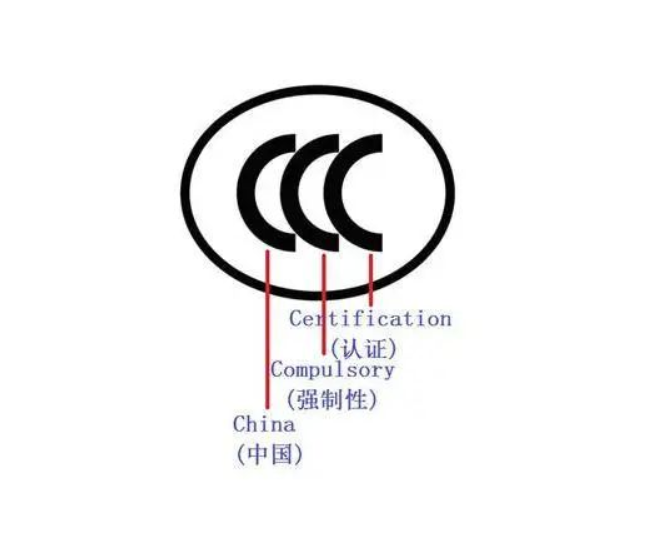
The 21700 cylindrical battery (diameter 21mm, length 70mm) boasts core advantages such as high capacity, high discharge rate, and long cycle life, making it a key power supply component for energy storage devices, power tools, portable electronics, and outdoor power supplies. It is a popular category in the domestic energy storage accessory market. To legally produce, supply as a complete set, or sell independently in China, the CCC certification is a mandatory threshold that must be met. Unlike the CCC certification for mobile phone chargers, which focuses on electrical safety compatibility, the CCC certification for 21700 cylindrical batteries is more focused on cell safety and charging-discharging stability, aligning with its high-discharge-rate usage scenarios. Products without certification are strictly prohibited from circulation, and violations will face regulatory inspections, fines, and product removal.

The main features of this high-definition recording device include night vision imaging and parking monitoring. It is designed to be suitable for use in vehicle-mounted environments with high temperatures and vibrations. It is a popular and essential product in the automotive aftermarket, covering various scenarios such as private cars and commercial vehicles. Exporting this product to the United States requires FCC ID certification as the core mandatory entry requirement. Unlike Thailand\'s NBTC which focuses on vehicle safety and radio frequency control, and Brazil\'s ANATEL which emphasizes local telecommunications regulations, FCC ID certification focuses on the radio frequency compliance of the wireless module (WiFi/Bluetooth) of the recording device. It is crucial for the product to pass the inspection by the US customs, be available on Amazon US and local offline channels, and directly determines the success or failure of the overseas venture.

The main features of this high-definition recording device include night vision imaging and parking monitoring. It is a car-mounted recording device specifically designed for complex driving environments and is a core must-have product in the Thai automotive aftermarket, covering various scenarios such as private cars and commercial vehicles. Exporting this product to Thailand, the NBTC certification is an unbreakable legal mandatory entry threshold. Unlike Brazil\'s ANATEL which focuses on dual control of radio frequency and electrical aspects, and Japan\'s PSE which focuses on energy storage safety, NBTC is an exclusive certification implemented by the Thai National Broadcasting and Telecommunications Commission. The core control focuses on the wireless transmission (such as WiFi, Bluetooth) compliance and the safety of vehicle-mounted use, directly determining whether the product can smoothly clear customs and enter the local Thai channels.

The network camera featuring high-definition video recording, wireless transmission, remote monitoring, and night vision capabilities is a must-have product in the Brazilian security market. It is widely used in home security, store surveillance, office duty, and other scenarios. Exporting this product to Brazil, obtaining ANATEL certification is an inevitable hard requirement. Unlike the focus on wearability and battery safety in fitness trackers\' CE certification and the focus on energy storage safety in battery packs\' PSE certification, ANATEL is a mandatory radio frequency and electrical safety certification specific to Brazil. It mainly controls the compliance and stability of the wireless transmission of the network camera and directly determines whether the product can clear customs, enter Brazilian local e-commerce and offline channels.
Learn the latest exciting content


Tik Tok