Center Certification & Testing International
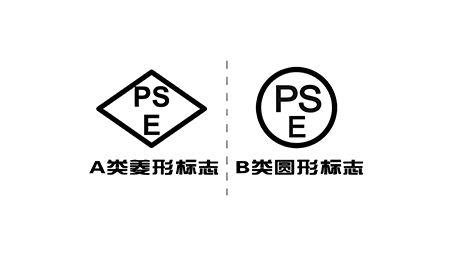
A battery pack with multiple cells connected in series and capable of delivering high power output, serving as the core power supply component for energy storage devices, industrial machinery, and intelligent equipment, is a must-have energy storage product for export to Japan. To successfully enter the Japanese market for circulation and sales, the PSE certification is a mandatory legal threshold and also the core document for passing customs inspections and entering local Japanese e-commerce and offline channels. Unlike the EU CE, which focuses on general safety, and the FCC, which focuses on radio frequency control, the Japanese PSE certification specifically implements strict control over the safety risks of electrical products. The battery pack, as a high-risk energy storage component, is the key object of certification review, directly determining whether the product can smoothly enter the Japanese market.

Portable power banks, as essential charging devices for daily travel and office use, have gained stable sales in the EU market due to their multi-port fast charging and large-capacity energy storage capabilities. To successfully enter the 27 EU countries and the European Economic Area for sales, CE certification is a mandatory requirement and also the core document for product customs clearance and listing on e-commerce platforms. Unlike small smart devices such as fitness trackers and wireless keyboards, portable power banks are energy storage products with charging and discharging functions. CE certification focuses more on circuit safety, overload protection, and electromagnetic compatibility stability, directly affecting product safety and market access qualifications.
Label printers are core equipment for office and commercial use, divided into two categories: portable and desktop. They support both wireless (Bluetooth/WiFi) and wired dual connection modes. They are widely used in scenarios such as supermarket price tags, logistics labels, and office document annotations, and are essential products in the Canadian business office and retail markets. According to the regulatory requirements of the Canadian Innovation, Science and Economic Development Department (ISED), label printers need to be certified by function classification. Wireless models need to pass ISED-ID certification, non-wireless models need to pass ISED-SDOC certification. Failure to obtain certification will result in customs detention, fines, and product recall, directly affecting the delivery of overseas orders.
Bluetooth headphones are the core category of portable audio products worldwide, featuring wireless transmission, compact size, portability, and low power consumption. They operate on the 2.4GHz Bluetooth frequency band and are widely compatible with various digital devices such as mobile phones, tablets, and laptops. They are a must-have product in the Canadian audio consumption market. According to the regulatory requirements of the Innovation, Science and Economic Development Department of Canada (ISED), Bluetooth headphones, as non-licensed wireless devices, must obtain ISED certification and mark the IC ID to legally enter the Canadian market for sales and入駐 local e-commerce platforms. Without certification, they will face customs detention, fines, and product recalls, which directly affects the delivery of overseas orders.
Polymer batteries are the core energy storage components for various portable digital and smart devices. Their key features include being lightweight, flexible, having high energy density, and being compact in size. They can be customized in shape as needed and are compatible with Bluetooth speakers, mobile phones, tablets, smart wearables, and other products. The rated capacity ranges from several hundred to tens of thousands of mAh, balancing energy storage efficiency with device form factor compatibility. According to the United Nations\' dangerous goods transportation rules, IATA\'s \"Dangerous Goods Regulations,\" and IMDG\'s \"International Maritime Dangerous Goods Regulations,\" polymer batteries, as an important category of lithium batteries, must undergo UN38.3 certification and obtain a qualified report to ensure compliance with global air, sea, and rail multimodal transportation. Without certification, they will be refused for carriage, detained by customs, and directly affect the delivery of overseas orders.
The 18650 battery is the most commonly used cylindrical lithium battery, with standardized dimensions (diameter 18mm, length 65mm), capacity ranging from 1000 to 3500mAh. It features stable battery life and strong compatibility, and is widely used in various digital and energy storage devices such as power banks, Bluetooth speakers, outdoor energy storage, and laptops. It is a core energy storage component for portable devices worldwide. According to the United Nations Dangerous Goods Transportation Rules, IATA\'s \"Dangerous Goods Regulations\", and IMDG\'s \"International Maritime Dangerous Goods Regulations\", 18650 batteries, as a core category of lithium batteries, must pass UN38.3 certification and obtain a qualified report to achieve compliance for global air, sea, and rail multimodal transportation. Without certification, they will be refused for carriage, detained by customs, and directly affect the delivery of overseas orders.
The fascial gun, as a popular category of fitness equipment, features a built-in lithium battery (mostly large-capacity cylindrical/supercapacitor models, suitable for high-frequency vibration scenarios, and some are detachable). The lithium battery is the core component. According to the requirements of the \"Electrical and Household Appliance Safety Management Act\" in South Korea, the battery of the fascial gun must obtain KC certification before it can legally enter the South Korean market for sales and be listed on local e-commerce platforms. Without certification, it will face customs clearance obstacles, fines, and product recalls.
The fascial gun, as a popular category of fitness equipment, features a built-in lithium battery (mostly large-capacity cylindrical/supercapacitor models, suitable for high-frequency vibration scenarios, and some are detachable). The core component of this battery is crucial. According to the United Nations\' Dangerous Goods Transportation Rules, the battery of the fascial gun must pass the UN38.3 certification to ensure compliance with global air, sea, and other multimodal transportation regulations. Without certification, it will be refused for transportation and detained by customs.
Learn the latest exciting content
Tik Tok